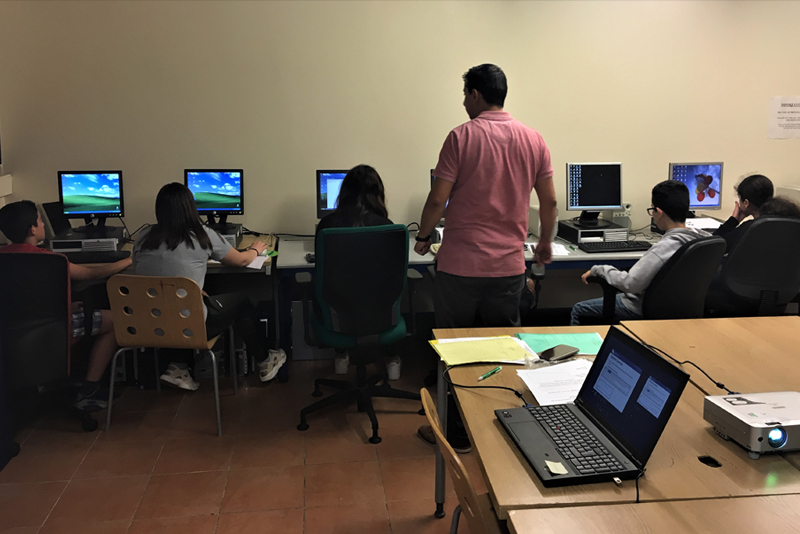
There is an open learning centre with 6 networked workstations with Internet access and volunteer tutors. This service has successfully participated in an European Union funded IT training programme and when further funding is secured will become a model for refugee participation in lifelong learning.
During its lifetime, the project secured the continuation of the centre’s open learning centre through the provision of a wireless system and other resources than enabled a post holder to run a diverse range of free IT and Internet courses for all levels. Although the project came to an end, the open learning centre is open to public use but needs a structured service that includes the provision of regular classes that aims to address the need in this field.
"Education is our passport to the future, for tomorrow belongs to the people who prepare for it today....Malcolm X
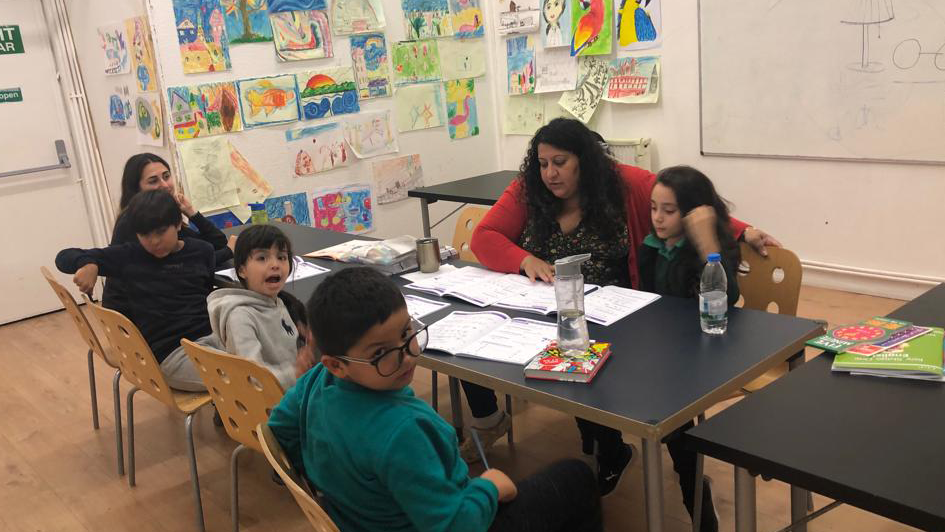
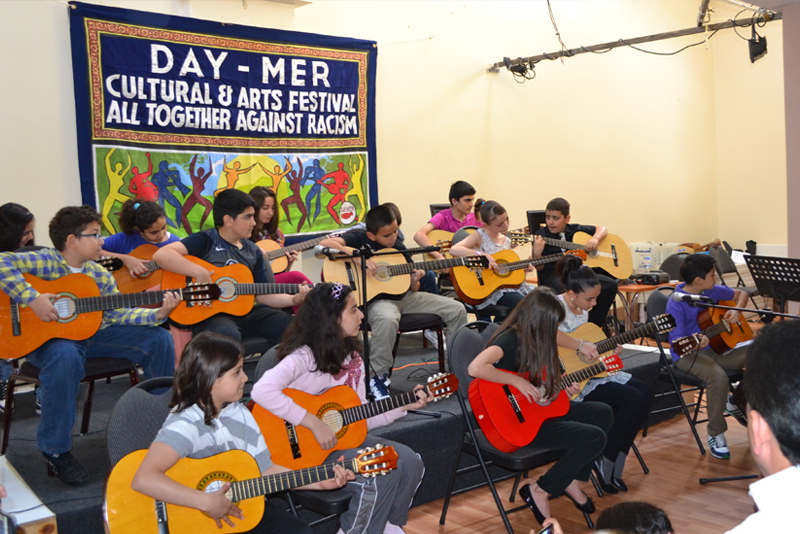
Some of our students
The aims of this project are: to engage sections of the community not traditionally accessing extra education support – particularly young school students and women; to make learning a natural part of the community centre activities; to develop high level IT classes for more advanced students; to identify and develop other classes that can support the client group; to access people into other Day-Mer services and activities; to link clients into the business advice service; to develop IT services for business clients; to provide training to centre staff and volunteers; to access other resources for the open-learning centre.
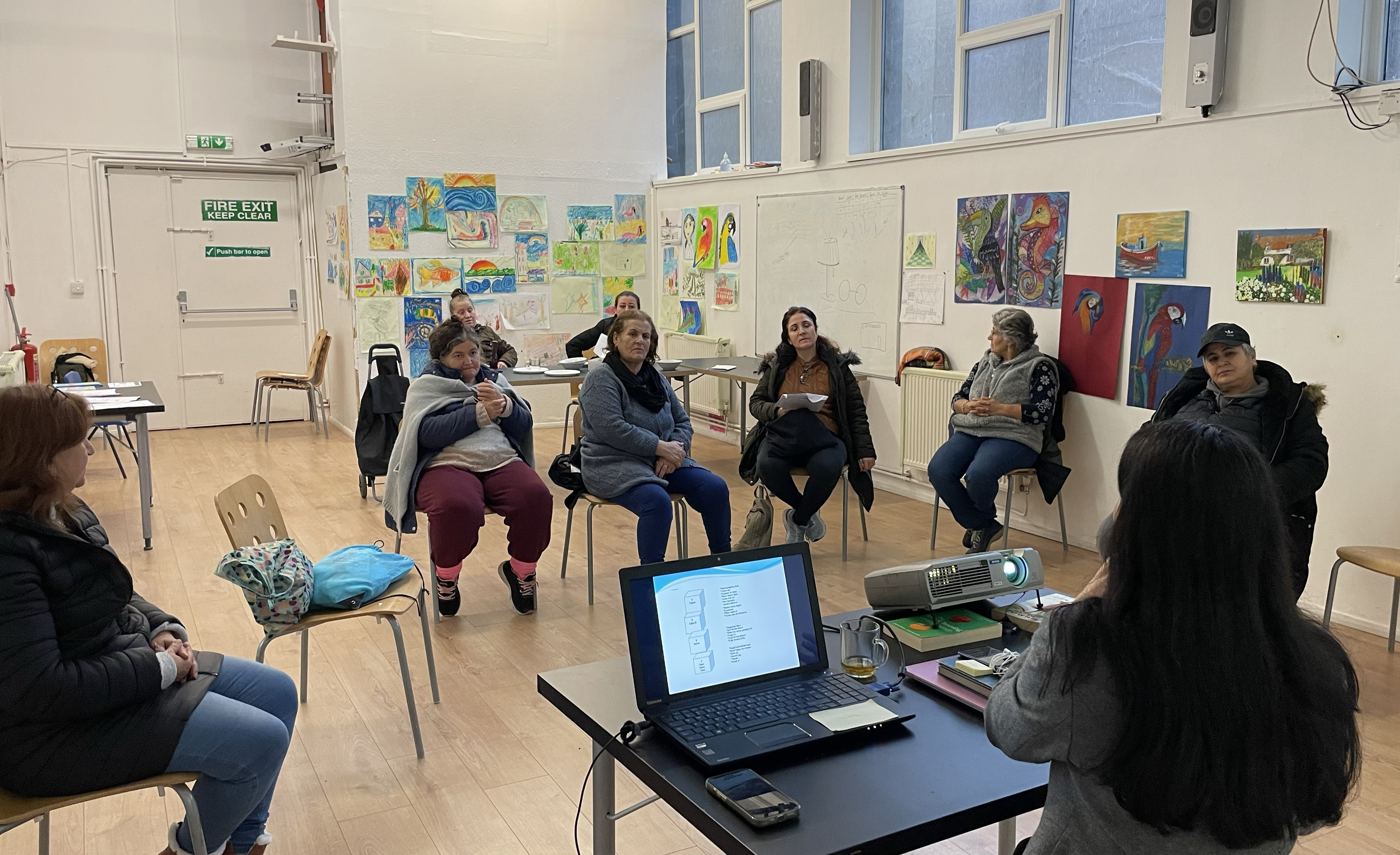
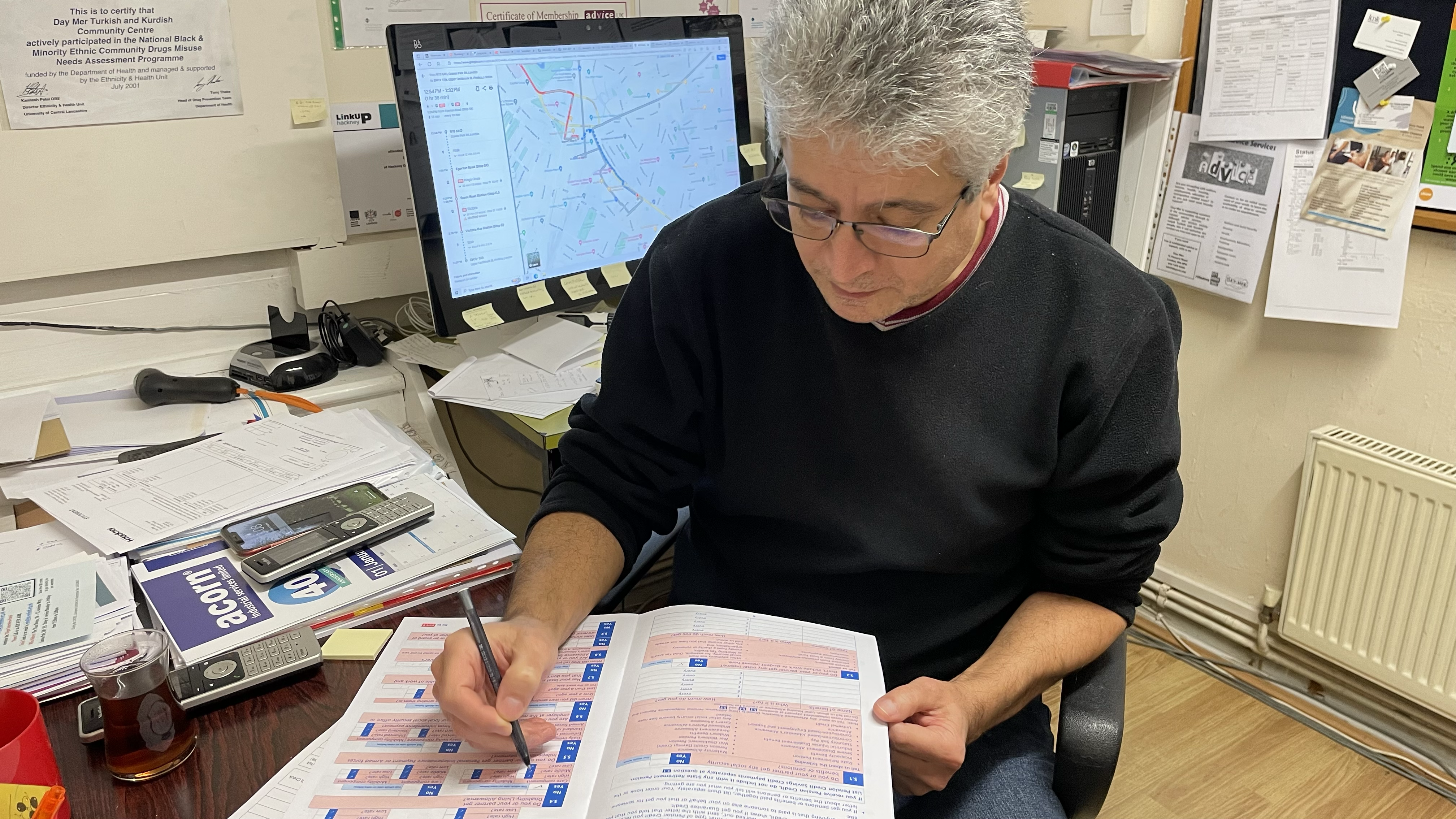
Because the project has been ERF funded for two years, and the open-learning centre has been functioning for longer, the needs of the client group have been well documented and researched. This was done through constant debate within the user groups, discussions among the staff and external evaluation. This has proved to be the most valuable way to determine what we should provide. This year, due to the contacts and experience of the IT tutor, the majority of clients for the classes are young people. The service provided 6 classes over the year. In the first ten weeks, there were two classes for beginners. This was used to determine the level of the client group and to enable planning for the next two terms. These classes were mainly filled by young people from the schools and from the Day-Mer membership with only 10% female. The second term saw 2 classes, one for beginners and one for more advanced users covering areas such as Excel and advanced Word. These classes were a mix of young people and older men, with women making up 40%. These were recruited by word-of-mouth, outreach on the estates through the co-educators and through the mother-tongue literacy programme. The third term had three classes, one for beginners, one for Word and Excel, and one new class for Internet and email. The male: female ratio was 50:50. The lesson learned from this was that in order to engage females, outreach and development work is necessary. Also, if there is a range of classes, they will be filled. There was one-to-one support offered to students doing high-level programming. In order to do this the tutor had to attend further training also. Staff and volunteers in Day-Mer took advantage of individual support in Excel, Internet and word. There is a need for a class in web design.
Over the course of the ERF projects Day-Mer has managed to lever in directly around £40K for additional IT resources and the refurbishment of the open-learning centre. We have constantly been making applications for resources. Things like new chairs, desks, floor, painting etc have all made the students feel part of an improving service. The additional IT resources – 10 laptops in a wireless network - has increased capacity and made it possible to have classes designed to suit the number of students, to move the classes around the building when there is pressure on space, to allow students to take laptops to other parts of the building to work on their own. This has given the centre flexibility around the learning environment that would not have otherwise been possible. There is a need for constant investment and upgrading.
The project had a successful year in terms of outcome. The main reason for this would be that the need has been correctly identified and the solution suggested has worked. In our case, we were trying to help refugees by giving them skills which enables them to go into mainstream employment and education. Through the IT classes, we have seen people moving into employment or getting into education. Those who have not made it to employment and education will be looking to improve this year and aim to be part of the mainstream society.
People who did not know anything about computers before have managed to understand how a computer works and how things operate in a Windows environment. For parents who have attended the IT classes it was good to see that they were able to help some of their children’s work with the IT skills they gained. Most parents were complaining that they are not able to help their younger kids with basic IT work. After doing IT classes it was good to see most people were able to help their kids and solve their problems. In some cases if a problem was not solved a child and the parent attended the drop in sessions at the centre and solved their problems that way. The other benefit to parents was that they were able to write letters and notes with the use of computing.
There were students who attended IT classes and managed to find jobs in different industries by just having basic computer skills. Even to work in a retail outlet you will need basic IT skills. Examples are given as case stories to show how IT classes have effected some peoples lives. Student who attended the Internet and e-mail classes are able to communicate with their relatives in Turkey or in another part of world through the usage of e-mail. This has made things a bit better especially for the ones who felt lonely in this country. Through this they are able to get instant messages from their friends and families. This was mostly the case with older students. Young students have also made use of this such as to send friends mails and send work to each other.
Elif Uzun and Basak Gunes
Elif and Basak both came to this country to live having completed their university degrees in Turkey. They both started to live in Reading where they were doing some languages courses to improve their English. After doing that for two years they decided to move to London. They were both unemployed and looking for jobs. They had some computing skills but it was no good as it was all in Turkish. So they were not able to figure out how to use a computer in English. Once they were in London they knew that they had to improve their computing skills. Through word-of-mouth they found out about the IT courses in Day-mer. They then started attending the classes at phase one. Because they had previous knowledge of computing they were able to understand most of the course much quicker than other students. So within the first phase they were able to work out most of the content. Also drop-in sessions helped them a lot because they were attending these sessions whenever they had spare time. After completing phase one they both had a job offer from Day-mer to work as co-educators in secondary schools helping Turkish speaking students. After having interviews they both got the jobs. Elif is currently working for Clapton Girls School and Basak working in the Homerton Secondary School. They both carried on with the IT classes attending phase two and three and completing a successful year. They are currently working at the same school where they had extensions of two years to their contract.
Mehmet Ali Kurban
Mehmet Ali Kurban has been a member of Day-mer for more then 10 years. He has two kids and has been living in London for nearly 12 years. He can speak some English. He had started attending IT classes from phase two. He started at the beginner’s class. He knew hardly anything about computers and was complaining that he couldn’t help his kids with their homework and was telling us the difficulties he had writing letters. His main aim was to learn how to use the computer especially the applications such as Microsoft Word and Excel to help his kids and then learn about Internet. Mehmet Ali attended all beginner classes and completed the first 10 weeks successfully. He was always practicing what he did in the class at home and he was always improving. He managed to do Microsoft Excel and Word class in the phase three and completed the year attending two classes. He now says he is able to help his kids with their homework and can now write letters on the computer.